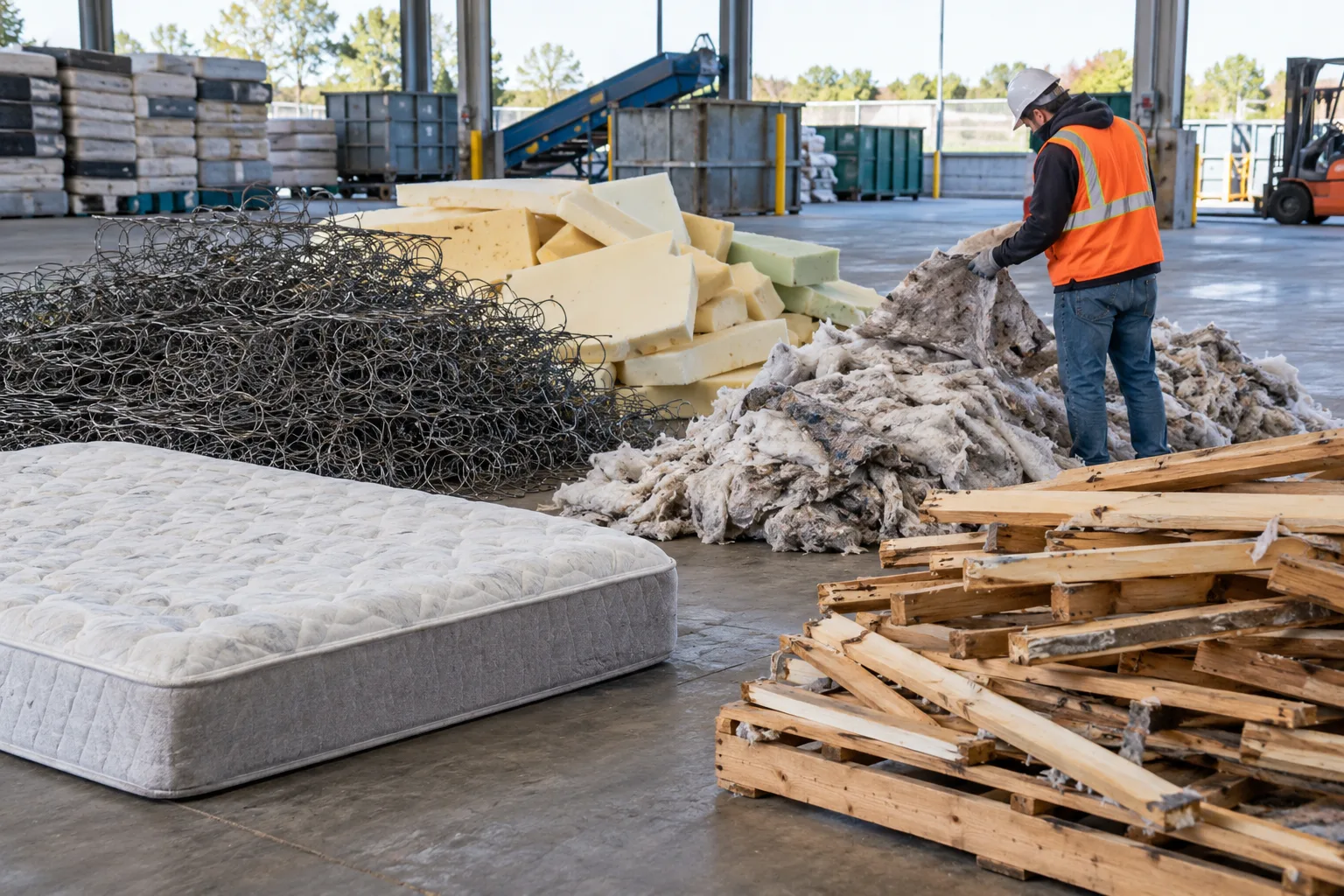
Mattresses contain mixed materials, so recycling depends on a facility that accepts and separates them. Ask where the specific load will go before treating “eco-friendly” language as a guarantee.
What a recycler may separate
Typical components include steel, foam, textile fiber, and wood. Acceptance and recovery depend on condition, contamination, facility capability, and local rules. EPA lists mattresses as a material that may be handled through transfer stations, but tells residents to confirm acceptance with the local program.
Rules differ across nearby counties
Wilson County publishes convenience-center limits and directs some loads to its landfill; its current public page does not promise mattress recycling. Rutherford County announced a designated mattress and box-spring recycling program effective August 1, 2026, with specific sites and a per-item fee. Those rules apply to eligible Rutherford County users, not automatically to Mount Juliet addresses.
Questions to ask a provider
- Will this mattress be accepted for recycling in its current condition?
- Which facility is expected to receive it?
- Are box springs, adjustable bases, and frames handled the same way?
- What happens if the recycling facility rejects the item?
- Is any recycling charge included in the estimate?
Condition matters
Wet, pest-affected, or heavily contaminated mattresses may be rejected or require special handling. Report the condition before pickup. Do not seal or treat an item in a way that hides a hazard from the crew.
Use the mattress recycling request page to understand the limits of the service claim, then email to confirm the destination for your load.
Sources checked
Safety guidance: U.S. Occupational Safety and Health Administration. Local disposal and recycling details: Wilson County, Tennessee; Rutherford County, Tennessee; and the U.S. Environmental Protection Agency. Research retrieved October 14, 2026.